Trofie al Pesto Genovese: The Riviera Masterpiece
Why true Ligurian pesto must never meet heat, and how the twist of hand-rolled Trofie cradles cold-pressed olive oil emulsions.
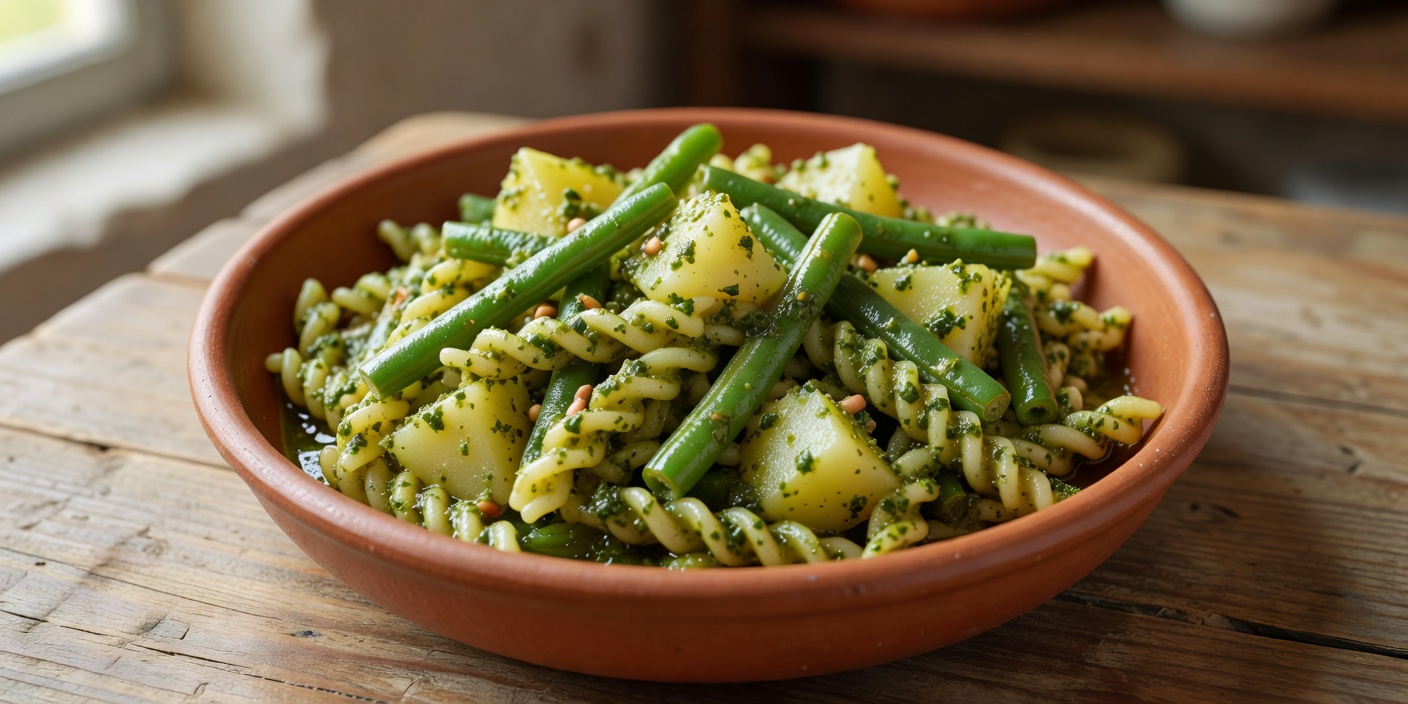
Why true Ligurian pesto must never meet heat, and how the twist of hand-rolled Trofie cradles cold-pressed olive oil emulsions.
Originating in the Gulf of Tigullio and the coastal village of Sori, Trofie are shaped without eggs from simple soft wheat flour, durum semolina, and water. A marble-sized pinch of dough is rolled beneath the heel of the palm across a wooden board and flicked with a brisk spiral motion.
This tapering spiral creates thicker pointed ends and a slender, ribbed center. As the pasta boils, the center cooks tender while the tapered tips retain a pleasant snap, offering varying surface textures that trap rich herbal paste.
Traditional Pesto Genovese is designated an intangible cultural masterpiece by culinary conservators for a reason: mechanical shearing by fast metal food processor blades generates friction heat. This heat oxidizes eugenol and linalool (the delicate aromatic terpenes of Basilico Genovese D.O.P.), causing the sauce to blacken and develop a harsh, metallic mint bitterness.
Using a Carrara marble mortar and a pear-wood pestle, basil leaves are ground in a gentle rotational dragging motion against coarse sea salt crystals. The cell walls rupture under hydraulic friction rather than heat-inducing chopping, releasing aromatic essential oils in a stable green emulsion.
In authentic Genoa households, Trofie are never boiled in isolation. Diced waxy potatoes and trimmed fresh green beans are dropped into the boiling pasta water alongside the Trofie. The starch released by the softening potato dissolves into the cooking liquor, aiding the raw pesto in adhering to the slippery pasta spirals without splitting the delicate extra virgin Riviera olive oil.