The Science & Alchemy of Roman Cacio e Pepe
Why simple sheep's milk cheese and black peppercorns constitute one of the most mechanically demanding emulsions in modern gastronomy.
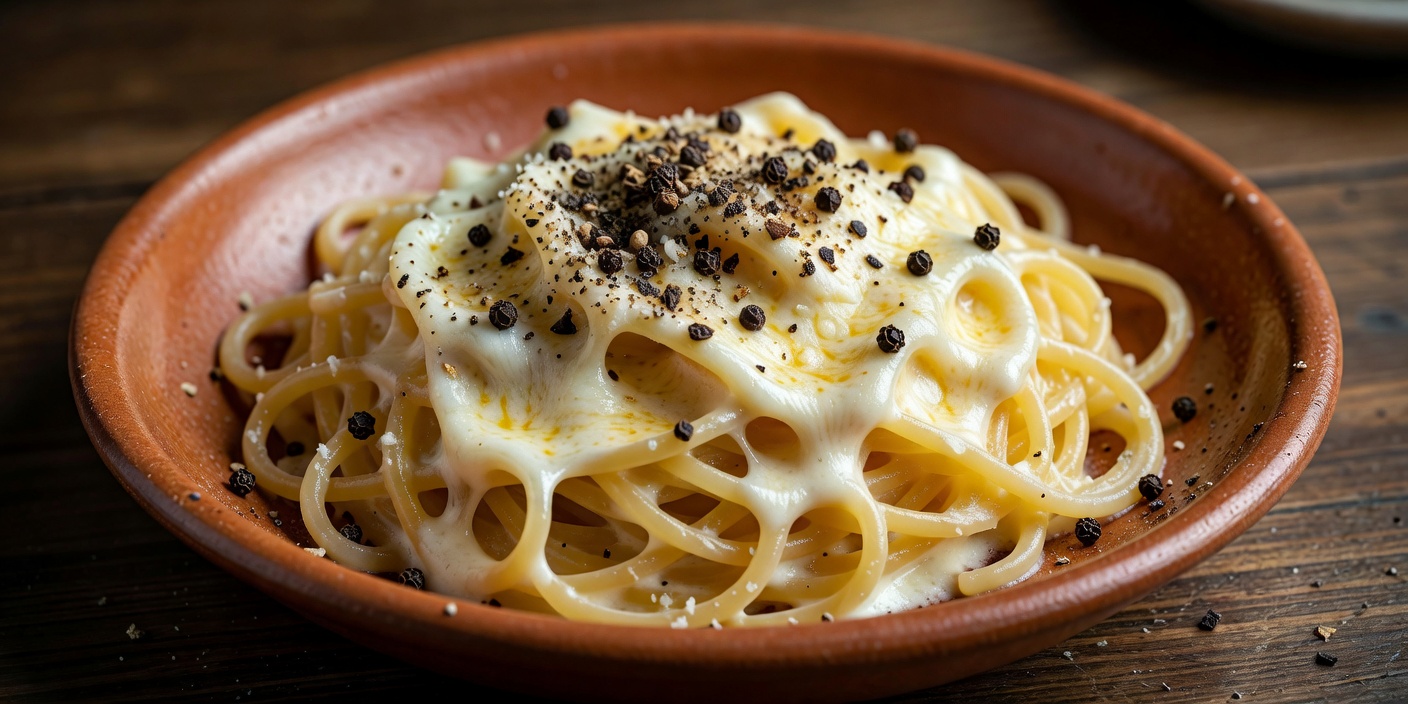
Why simple sheep's milk cheese and black peppercorns constitute one of the most mechanically demanding emulsions in modern gastronomy.
Cacio e Pepe was not conceived in fine-dining trattorias, but in the saddlebags of shepherds traversing the Apennine mountains of Lazio and Abruzzo during the seasonal transhumance (transumanza). Shepherds required caloric, non-perishable rations that could endure weeks in transit.
Aged Pecorino Romano—cured in sea salt—was resistant to spoilage. Dried whole black peppercorns preserved internal warmth during frigid highland nights. Combined with handmade dried durum ribbons and boiled water, shepherds had everything required for a nutritious feast.
Pecorino Romano contains proteins primarily composed of caseins. Above 65°C (149°F), casein proteins contract rapidly, expelling water and coagulating into rubbery strings (synaeresis). To achieve a creamy sauce (cremina), the cheese must be tempered off direct flame with starch-rich water at approximately 55°C–60°C.
Never use pre-grated cheese; anti-caking agents such as cellulose disrupt the emulsion. Genuine Roman chefs reject olive oil, butter, and heavy cream in authentic Cacio e Pepe. The unctuousness is purely a mechanical emulsion between cheese fats, sheep milk solids, and suspended grain starches.